


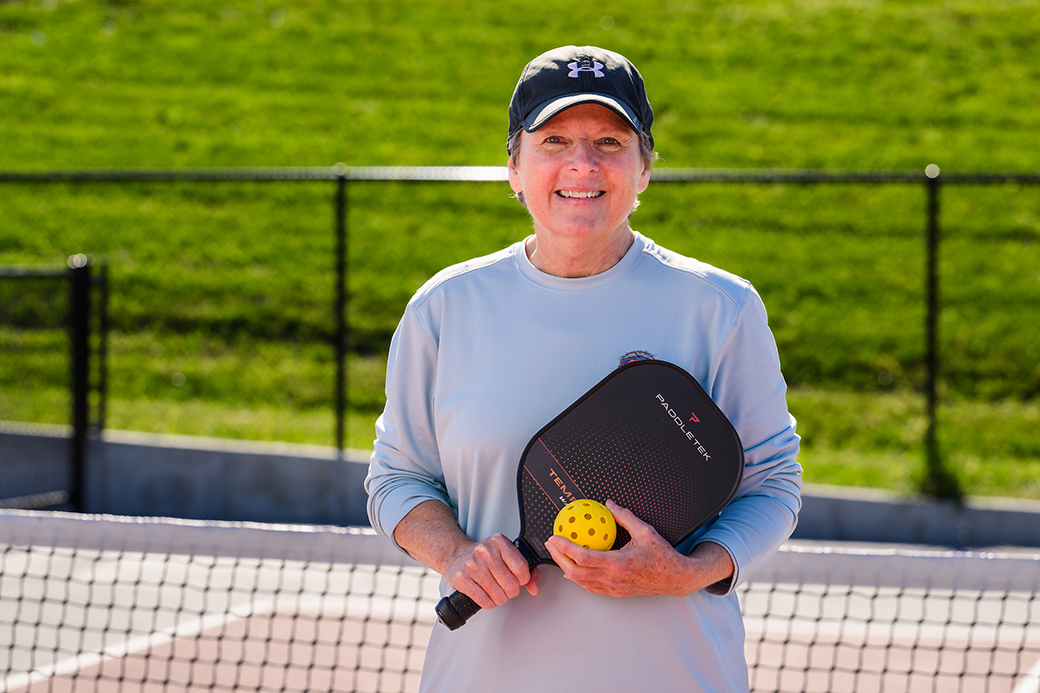
Debbie Carnahan has a competitive streak that might be bigger than she is.
Her 5-foot-3 stature — and the fact that she didn’t play organized sports in high school — fueled her to use the playing field as a proving ground throughout her adult life. She excelled at competitive travel softball, volleyball, racquetball and others.
“I started out as a novice at all these sports, and I just wanted to be good at it,” said Debbie, now retired and living in Camdenton, Missouri. “And as I got better, I got more competitive.”
Pickleball became her sport of choice after she retired, and the community atmosphere around her church league, as well as becoming a grandmother, tempered Debbie’s passion for winning a little.
“I retired so I could help take my grandkids back and forth to preschool while their parents taught,” Debbie said. “It's like I've got another job to do.”
That job got more difficult during the holidays in 2023. Debbie couldn’t keep up with her grandkids, which wasn’t like her. She got winded easily, ran low-grade fevers and discovered a small “pooch” under her left ribcage.
Debbie brought those concerns to an annual gynecology appointment, where her doctor recommended that she go to the emergency department for a CT scan of her spleen. She made the trip to University Hospital, nervously anticipating the news.
“From the ER, I got admitted to the hospital,” Debbie said. “I didn’t go home for three weeks because they were so thorough. I had a pulmonary team, a cardiac team, an infectious disease team and an oncology team, and they ruled things out until Dr. Hildebrandt visited me in January.”
Gerhard Hildebrandt, MD, is the director of Ellis Fischel Cancer Center and an expert in blood cancer. He told Debbie she had diffuse large B-cell leukemia (DLBCL), an aggressive and sometimes treatment-resistant cancer.
“When I heard cancer, Dr. Hildebrandt also told me in the next breath there was a chance for cure,” Debbie said. “And my sweet husband said, ‘You heard cancer. I heard cure.’”
She started chemotherapy right away and soon was back on her feet playing pickleball. By the end of treatment, her cancer was gone and she had a complete response. But three months later, a follow-up PET scan showed a new spot near her spleen, a key organ in the lymphatic and immune systems. More testing confirmed her lymphoma had returned.
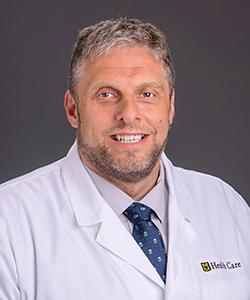
“Debbie is really an incredible person,” Dr. Hildebrandt said. “Positive, responsible, active, but dealing with something that can be hard to treat. Despite her complete response to the initial chemotherapy, she unfortunately developed what we call an early relapse.”
DLBCL relapses most commonly occur within two years of the end of treatment. Debbie’s cancer returned in September, less than six months after her final infusion.
Treating patients like Debbie has been Dr. Hildebrandt’s mission. He joined MU Health Care to create a Blood and Marrow Transplant and Cellular Therapy Program with advanced, innovative cancer treatments for people who need more than chemotherapy to treat their cancer.
Dr. Hildebrandt told Debbie that her cancer had relapsed, and she was an ideal candidate for a newer treatment option that was as competitive as she was, called chimeric antigen receptor T-cell therapy, or CAR-T.
“Before we had CAR-T, patients with early relapsed B-cell lymphoma had a median survival of 7 months, and only 20-30% survived for more than two years,” Dr. Hildebrandt said. “With CAR-T, we can, on average, significantly increase the chances for these patients."
CAR-T and chemotherapy work differently to kill cancer cells, and active trials and studies are looking at whether CAR-T can replace chemotherapy as the first line of treatment for certain cancers.
During chemotherapy, the treatment is delivered throughout the body, using your bloodstream to carry drugs that prevent cell division or cell repair, a process that kills cancer cells but also damages healthy cells.
CAR-T is an immunotherapy and works by genetically modifying T-cells to find and kill cancer cells more efficiently.
“Chemotherapy can wear the body out, and the cancer can actually learn to resist chemotherapy. That’s a major concern when lymphoma comes back early, and it helps explain why outcomes have historically been poor,” Dr. Hildebrandt said. “By leveraging the immune cells to directly target those cells and kill the cancer with a different mechanism, that is a huge, huge breakthrough. It’s important that patients in mid-Missouri have access to CAR-T.”
Debbie and Tim decided to go ahead, and she was one of the first patients at MU Health Care to receive CAR-T. Her T-cells were collected, genetically modified in a lab to identify the cancerous B-cells in her blood stream and shipped back to Ellis Fischel. Debbie was readmitted to the hospital, where she received another round of chemotherapy to weaken her cancer and prepare her body for the cell infusion. She received the infusion on February 1, 2025.
“Tim, bless his heart, he was an amazing caretaker,” Debbie said. “That support and advocacy is so important, because I think I had every side effect there was. I remember with every side effect, Dr. Hildebrandt’s team had something to take care of it, so I went into that treatment just knowing in my heart that that I was going to be taken care of.”
Debbie stayed in the hospital for 30 days to make sure the modified T-cells had eliminated her cancer without lasting side effects. She and Tim were grateful that they didn’t have to travel further from home to receive care, and by springtime, she was back on the pickleball court.
One of the most difficult things about treatment for Debbie was the lengthy immune suppression from treatment meant she had to spend months away from her grandkids if they were sick.
“I could sit outside and watch them swing and play, but we had to keep our distance,” Debbie said. “They knew their Memaw was sick, but they didn’t know what it was. That first hug of those grandbabies, that was pretty special.”
Since finishing treatment, Debbie is back to playing pickleball regularly. She’s made up for lost time with her grandkids, and she and Tim celebrated their 40th anniversary in November of 2025. She’s back to her pre-cancer life, but with a renewed sense of joy and gratefulness.
“In cancer care, patients become like family, and I’m very happy for her and optimistic she will have a lasting remission,” Dr. Hildebrandt said.
Back in Camdenton, Debbie’s pickleball group, which helped support her and Tim during treatment, has become a place of friendly competition, faith and cancer survivorship. After completing treatment, Debbie was one of four women who came to play. Three of them had survived either breast cancer or lymphoma.
“Now that I'm feeling good, I know that I can be of help to other people too,” Debbie said. “Since I've been diagnosed and cured, I have four other ladies who called me and said, ‘What can you tell me? What doctors do you go to?’ And I always say, ‘Ellis Fischel, that team there is amazing.’ It means a lot to return the favor and pass it forward.”