If you or someone you care about is living with a movement disorder and medications are not helping to control symptoms, deep brain stimulation (DBS) may be an option.

Deep brain stimulation is a surgical treatment that delivers targeted electrical stimulation (pulses) to areas of the brain involved in movement. It is considered the surgical treatment of choice for many people with Parkinson’s disease because it’s more effective and less invasive than traditional surgical approaches.

For those with advanced Parkinson’s, DBS may ease tremors, stiffness, dyskinesia and “on/off” fluctuations. It’s also used to treat essential tremor and certain types of dystonia.

MU Health Care is one of Missouri’s highest-volume DBS centers, with more than 40 years of experience. As an academic health system, we combine the latest advancements in movement disorder care with a patient-centered approach.

How Deep Brain Stimulation Works

DBS is a two-step surgical procedure that uses electrical stimulation to help manage symptoms of certain movement disorders. These impulses stimulate targeted areas in the brain that control movement.

The procedure does not remove brain tissue, and the stimulation can be adjusted, paused or turned off at any time, based on your needs.

Phase 1: Implanting the Brain Electrodes

A neurosurgeon places a thin wire with electrodes into the target area of the brain through a small opening in the skull. This surgery takes about three to five hours and may be performed while you're awake or under anesthesia.

Phase 2: Implanting the Battery (Pulse Generator)

One week later, our neurosurgeon places a small battery — similar to a pacemaker — under the skin near your collarbone. This device is connected to the brain electrodes with a wire placed under the skin. This second procedure usually takes one hour.

Our Approach to Deep Brain Stimulation

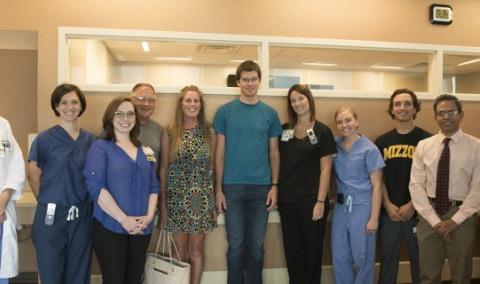
At MU Health Care, deep brain stimulation is a team-based treatment that starts with getting to know you and your symptoms and goals.

Your care team includes fellowship-trained neurologists, neurosurgeons, neuropsychologists, radiologists, physical therapists and rehabilitation specialists. We meet regularly to review each patient’s case and create a personalized plan.

As an academic health system, we also provide access to the latest surgical techniques, imaging and device programming tools for the most effective care.

You may see our team through a referral from your primary care physician or neurologist. We also offer second opinions when you need additional insight after seeing another specialist.

If DBS is the right fit for you, here’s what to expect:

Presurgical Evaluation

We’ll start with neurological and cognitive assessments and may show you a demo of the DBS system. These appointments typically last 30 to 40 minutes.

Surgery Scheduling

The procedure is done in two stages: electrode placement and battery implantation. You may be awake or asleep for part of the first surgery, depending on your condition. Your care team will recommend an approach based on the type of procedure and your individual needs.

After the first surgery, you may spend one to two nights in the hospital, including time in the ICU for close monitoring.

Post-Op Support

After discharge, you’ll recover at home with light activity, such as walking. You’ll need to avoid heavy lifting or strenuous movement for about a month.

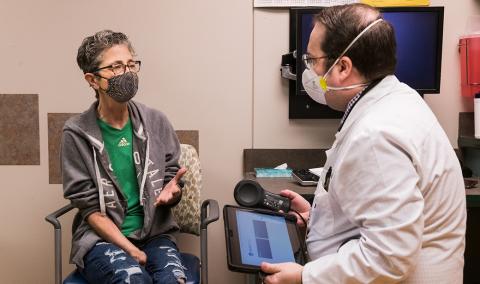
A few days later, you’ll return for your first device programming appointment. This visit can take several hours as your neurologist fine-tunes your settings for the best symptom relief. You’ll also receive a patient controller and learn how to adjust your device.

We’ll continue to monitor your progress through a series of follow-up visits — typically weekly, then monthly, then as needed. We’ll also check your incision site, answer your questions and update your settings over time.

Here’s what else to keep in mind:

  • Protect your equipment: Avoid sudden, excessive or repetitive twisting, stretching or bending to reduce stress on the device and wires.
  • Airport and security tips: Carry your identification card and ask for a hand search if needed. If a wand is used, ask security to avoid placing it over your battery.
  • Home electronics: Most household appliances are grounded and won’t interfere with your DBS.