Multiple sclerosis (MS) is a chronic disease that develops when your immune system attacks your central nervous system. With treatment advances available at MU Health Care, we can help manage MS symptoms and improve your quality of life.
To support you and your family, we’ve assembled a team of experienced MS specialists at MU Health Care. Here, your care team includes:
MU Health Care has all the specialists you need right here to help manage your multiple sclerosis.
MS Symptoms
Possible signs of MS include:
- Blurred or double vision, decreased color vision or loss of vision
- Changes in bowel habits
- Changes in sexual function
- Cognitive changes, such as poor concentration or memory loss
- Decreased sensation in the torso
- Difficulty walking
- Dizziness
- Emotional changes including depression
- Eye pain
- Fatigue
- Muscle weakness or stiffness
- Numbness or tingling in the face, limbs or body
- Poor coordination
- Speech or swallowing difficulties
- Tremors
- Urinary incontinence
How to See Our MS Specialists
If you have symptoms that concern you or you’ve been diagnosed with MS, our neurologists can help. Your primary care doctor, ophthalmologist, urologist or other specialist can refer you to our MS team. If you have to travel to see us, we can work with your local neurologist to manage your care.
Our MS specialists can also provide second opinions on your diagnosis or treatment.
Types of MS
We treat all types of multiple sclerosis, including:
- Relapsing-remitting MS (RRMS): Includes flare-ups of symptoms with no worsening in between them.
- Secondary-progressive MS (SPMS): Starts as flare-ups and continues to get worse over time without flare-ups.
- Primary-progressive MS (PPMS): Usually involves a steady worsening of symptoms without distinct flare-ups.
We also treat clinically isolated syndrome (CIS), which is a single episode of MS-like symptoms. For example, people with CIS may have numbness or weakness in their limbs or vision problems.
MS Diagnosis at MU Health Care
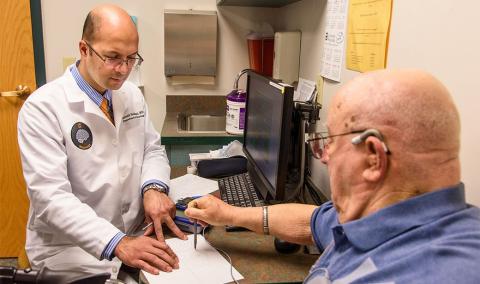
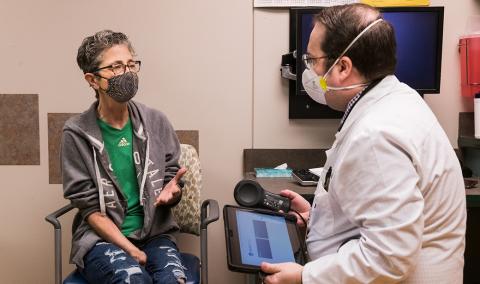
For your first appointment, you’ll meet with a neurologist who specializes in diagnosing and treating MS. Your neurologist will ask questions about your medical and family history. They will also perform a neurological exam that checks your muscles, reflexes, nerves, walking, balance and other factors.
Your neurologist may also recommend advanced testing for MS, which is available at MU Health Care.
Tests for MS
No single test can determine if you have MS, so we may order several tests, including:
- Blood tests: Help rule out other conditions that may cause your symptoms.
- Magnetic resonance imaging (MRI): Look for areas of scarring (lesions) in the brain and spinal cord associated with MS.
- Lumbar puncture (spinal tap): Takes a sample of fluid from your lower back to check for signs of inflammation.
- Neuropsychological tests: Check for issues related to memory, thinking or language.
- Advanced eye tests: Can detect damage to the optic nerve that may occur with MS.