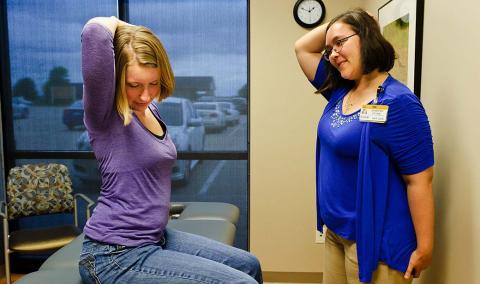
Whether you have osteoarthritis, lupus, gout, osteoporosis or a rare autoimmune disease, you can find support at MU Health Care. Our rheumatologists manage all types of arthritis and inflammatory conditions affecting your joints, bones and other parts of your body.
Autoimmune and inflammatory conditions occur when the immune system mistakenly attacks the body. These conditions can affect more than your joints. They may also involve your skin, lungs, eyes, kidneys and other organs. Symptoms of autoimmune disorders and joint conditions like arthritis often overlap or mimic those of other diseases. Because these conditions are hard to diagnose and treat, it’s important to see a rheumatologist who specializes in managing them.
When to See a Rheumatologist
A rheumatologist may be able to help if you have a combination of the following symptoms:
- Persistent joint pain and swelling
- Fevers
- Rashes
- Fatigue
- Chest pain
- Difficulty breathing
- Blood in your urine
Your primary care provider can refer you to us if you have symptoms or abnormal lab results, such as a positive antinuclear antibody (ANA) test. Importantly, a positive ANA test alone does not mean you have an autoimmune condition. Our specialists help interpret results and determine next steps. We also offer second opinions for patients already under rheumatology care.
Our Approach to Rheumatology Care
Autoimmune and inflammatory conditions often affect multiple areas of the body. Our care is designed to address the full picture of your health.
Your rheumatologist works closely with other specialists to create a coordinated, personalized care plan. Depending on your needs, your care team may include:
- Orthopaedic surgeons: Offer joint replacement and other surgeries to improve your joint function and mobility.
- Nephrologists: Provide treatments when autoimmune conditions like lupus affect the kidneys.
- Ophthalmologists: Can help monitor and manage inflammation in the eye related to autoimmune conditions.
- Pulmonologists: Care for lung disease related to scleroderma and other autoimmune diseases.
- Physical therapists: Can create exercise plans to help you manage your pain, improve strength and reduce joint stiffness.
We also have a combined rheumatology-dermatology clinic for patients with autoimmune diseases like psoriatic arthritis and scleroderma that affect the skin. With this team-based approach, you can usually see two highly experienced specialists during one visit.
Conditions We Treat
Our rheumatology team treats a wide range of joint, bone and autoimmune conditions, including:
- Ankylosing spondylitis
- Autoimmune disorders
- Back pain
- Fibromyalgia
- Gout
- Knee pain
- Lupus
- Osteoarthritis
- Osteopenia
- Osteoporosis
- Polymyalgia rheumatica
- Psoriatic arthritis
- Raynaud’s disease
- Rheumatoid arthritis (RA)
- Sarcoidosis
- Scleroderma
- Sjogren’s syndrome
- Vasculitis