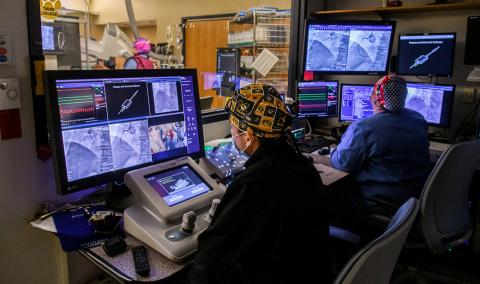
While some chest pain can be related to minor issues like heartburn or muscle strain, other causes, such as a heart attack or coronary artery disease (CAD), can be more serious. At MU Health Care, we specialize in finding the cause of your pain and offering treatment that’s personalized to you.
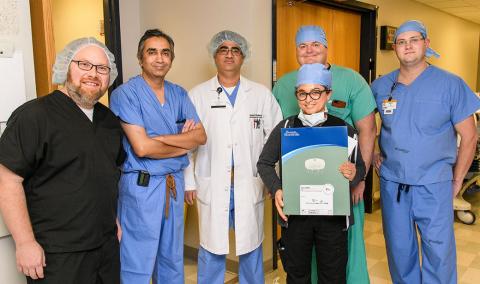
Our experts are here to provide the answers and guidance you need. Our skilled chest pain team includes:
- Cardiologists: Diagnose and manage heart issues that cause chest pain.
- Interventional cardiologists: Perform minimally invasive procedures to open arteries and reduce chest pain.
- Cardiac surgeons: Perform complex procedures, including coronary artery bypass surgery for advanced heart disease and surgery to repair or replace heart valves.
- Nurse navigators: Help coordinate care after you’ve been hospitalized for chest pain from heart attacks, heart failure, atrial fibrillation, post-cardiac surgery, valve surgery or any other cardiological issue.
Together, we’ll work with you to find a path forward, which starts with uncovering the cause of your chest pain.
Angina and Other Common Causes of Chest Pain
When your heart muscle doesn’t receive enough blood and oxygen, you can develop a type of chest pain called angina. Other heart-related conditions that can cause chest pain include:
Sometimes, chest pain is not related to the heart at all. Instead, you may have chest pain from issues like:
- Pain in the muscles or bones of the chest
- Inflammation near the breastbone (costochondritis)
- Inflammation of the lining of the heart (pericarditis)
- Inflammation of the lung lining (pleurisy)
- Heartburn (gastroesophageal reflux disease, or GERD)
- Upper respiratory infections like pneumonia
- Stress or anxiety
If you have ongoing or recurring chest pain, don’t ignore it. Even stable chest pain can affect your quality of life and, in some cases, be life-threatening. To see us, you can get a referral from your primary care provider or contact us directly. We also provide second opinions if you want to better understand your options for chest pain.
When to Get Emergency Care for Sudden Chest Pain
Heart attacks sometimes cause sudden chest pain. They may also cause symptoms like:
- Fast or irregular heartbeat
- Nausea or vomiting
- Pain, pressure or a strange feeling in your back, neck, jaw, upper belly, shoulders or arms
- Shortness of breath
- Sudden weakness or lightheadedness
- Sweating
If you’re having sudden chest pain and other symptoms, call 911 right away. This helps you receive faster care since an ambulance team can begin treatment before you arrive at the hospital. Paramedics can also alert our heart attack team, so we’re ready and waiting to care for you.
How We Diagnose Chest Pain
To check for heart issues causing chest pain, we may order one or more of the following tests:
- Electrocardiogram (ECG): A painless test that checks electrical activity in your heart.
- Echocardiogram (ECHO): Uses ultrasound to create real-time images to evaluate heart function and valves.
- Stress test: Monitors your heart rate, blood pressure and breathing during exercise to evaluate for underlying severe CAD.
- Magnetic resonance imaging (MRI): Uses strong magnets to provide detailed images of your heart.
- Positron emission tomography/computed tomography (PET/CT): Checks heart function and blood flow and evaluates for underlying coronary artery disease.
- CT angiogram: Uses computed tomography to see inside arteries and evaluate for blockages without the need for cardiac catheterization.
- Cardiac catheterization: A minimally invasive procedure during which a thin tube (catheter) is used to inject x-ray dye into the heart vessels to assess for heart blockages.
If you already have a local cardiologist, we’ll let them know your diagnosis and work together to coordinate your care.