Photorefractive keratectomy (PRK) is a quick, flap‑free outpatient procedure that gently reshapes your cornea to improve your vision.

PRK is a type of laser eye surgery that focuses light inside your eye. It corrects common vision problems, called refractive errors, that change how your eye bends light and can reduce or even eliminate your need for glasses or contacts.

Unlike LASIK surgery, PRK doesn’t require a corneal flap. This makes it a good option if you have thin corneas, live an active lifestyle or aren’t a candidate for other vision correction procedures. It was the first FDA-approved laser vision correction procedure and still delivers excellent results today.

At MU Health Care, we use the WaveLight® Allegretto excimer laser — the same advanced technology used in LASIK — to deliver precise, flap-free results.

Am I a Candidate for PRK?

To determine whether PRK is a good option for you, your eye surgeon will evaluate your vision, eye health and goals.

You may be a good candidate for PRK if you:

  • Are at least 18 years old
  • Are not pregnant or breastfeeding at the time of surgery
  • Are not too nearsighted or farsighted for the approved treatment ranges
  • Have a healthy cornea and a stable vision prescription (i.e., your refraction should not have changed in the past year)
  • Have dry eyes or other factors that make a corneal flap less ideal
  • Lead an active lifestyle or work in environments where eye injuries are more likely (such as sports or military roles)
  • Need a flapless option due to thin or irregular corneas
  • Want to reduce or eliminate your need for glasses or contacts

PRK vs LASIK

Both PRK and LASIK use the same excimer laser to reshape the cornea, but they are different procedures.

LASIK involves creating a thin flap before the laser treatment, which often leads to faster visual recovery.

With PRK, most people regain normal function within about a week, and vision continues to improve gradually over several weeks. LASIK patients often see clearly within a day or two.

Your surgeon can help you decide which option best fits your eyes, goals and lifestyle.

Our Approach to PRK

We start by understanding your vision goals and making sure PRK is the right fit for your safety and long-term eye health.

Evaluation

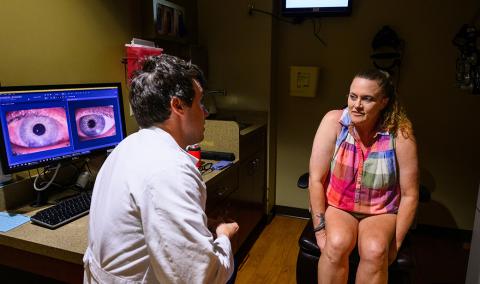
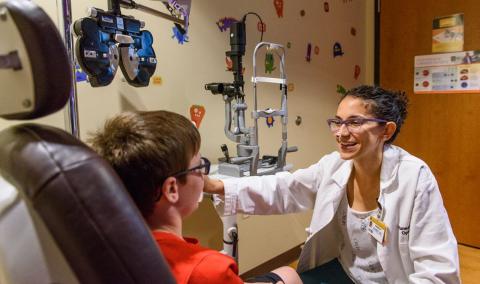
Your evaluation takes about an hour and includes a full eye exam, prescription checks and advanced corneal scans. If results are borderline, we may repeat testing or postpone surgery to ensure the best outcome.

Technology

We use the WaveLight® Allegretto excimer laser with wavefront-optimized planning to deliver a personalized treatment based on your exact eye measurements. This advanced system enhances precision, reduces aberrations and supports faster, more comfortable healing.

Team and Collaboration

As one of mid-Missouri’s most experienced refractive surgery teams, our surgeons and optometrists work together to evaluate your vision and guide your care. You will also have direct access to your surgeon for follow-up support.

What to Expect With PRK

If you’re a match for PRK, here’s what to expect at every stage.

Before PRK Surgery

Apply lubricating drops for two weeks to prepare your eyes. Clean your eyelids daily for one week using gentle baby-shampoo lather.

Discontinue contact lenses at least one week before surgery. Establish a plan for your outpatient procedure and arrange a ride home.

Surgery Day

Your visit on surgery day will begin with a relaxing pill, if you choose, to help you stay comfortable. For the surgery itself, you can expect each eye to take about five minutes, with the laser portion lasting just seconds.

You’ll leave wearing protective goggles placed by your care team and should keep them on until your next-day visit. Remember to bring a driver for the day of surgery and your follow-up appointment.

After Surgery

You may experience scratchy or irritated eyes for three to four days as they heal. A bandage contact lens will protect the surface of your eye during recovery.

Continue using your prescribed eye drops exactly as directed and avoid rubbing your eyes. Expect to resume many daily activities in about one week, though vision continues to refine over several weeks.

Plan to see your surgeon the day after surgery and at least two more times to monitor healing. Keep away from swimming pools, hot tubs and dusty environments for two weeks.

PRK Vision Results

With PRK, our goal is to help you achieve the clearest vision possible. Results vary depending on whether you’re nearsighted, farsighted or have astigmatism.

Our surgeons follow guidance from the U.S. Food and Drug Administration to set realistic expectations and help you understand your potential outcomes.

The approved treatment range for nearsightedness (myopia) is up to -12 diopters of sphere and -6 diopters of astigmatism. For farsightedness (hyperopia), the approved treatment range is up to +6 diopters of sphere and +5 diopters of astigmatism.

Cost and Insurance

PRK is considered an elective procedure, so most insurance plans do not cover it.

The cost is $2,100 per eye, which includes the procedure, follow-up care and any necessary vision enhancement procedures for up to one year.

Additional Laser Eye Surgery We Offer

In addition to PRK, our experienced surgeons offer other laser correction options to fit your vision goals and lifestyle. LASIK (laser-assisted in situ keratomileusis) creates a thin flap on the surface of the cornea using a laser. The flap is lifted so your surgeon can reshape the tissue underneath, then placed back in position to heal.