If cataracts affect your vision or daily life, our specialists offer advanced care and surgical options to help you see more clearly.
Cataracts occur when the clear lens inside your eye becomes cloudy, making vision look blurry, dim or hazy.
They usually develop slowly, with early signs including glare, halos or faded colors. Because changes happen gradually, many people don’t notice how much their vision has shifted until cataracts are already advanced.
As cataracts progress, everyday activities like reading, driving at night or seeing in bright sunlight can become more difficult. When that happens, surgery may be the most effective treatment.
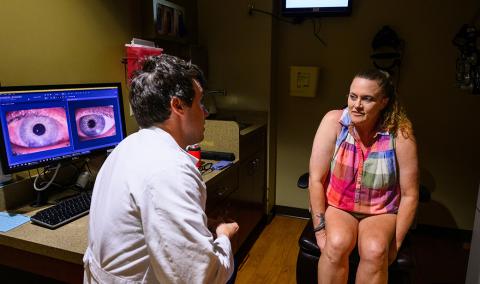
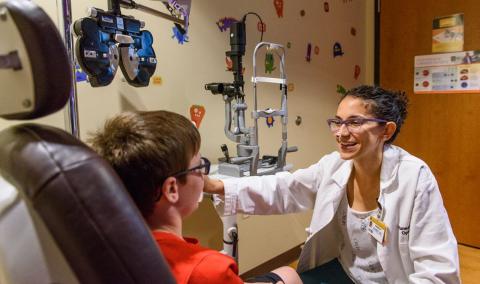
At MU Health Care’s Mason Eye Clinic, our eye care specialists (ophthalmologists) use advanced imaging to diagnose cataracts and perform thousands of surgeries each year.
As part of an academic health system, they also teach and conduct research, giving you access to the latest advances in eye care.
Whether you need monitoring strategies for early-stage cataracts or treatment for advanced cataracts, we offer a full range of personalized care options to support your vision and health.
Cataract Care at MU Health Care
We personalize your cataract care using the most advanced diagnostic and surgical options in central Missouri.
Our team includes ophthalmologists, educators and researchers who work together to deliver complete care backed by the latest technology and clinical research.
Cataract Symptoms
Cataract symptoms often develop slowly, with subtle changes at first, followed by more noticeable issues as the condition worsens.
Common symptoms of cataracts include:
- Blurry or cloudy vision
- Colors looking faded or more yellow
- Difficulty seeing at night or in low light, making driving difficult
- Frequent changes in glasses or contact lens prescriptions
- Glare or halos around lights
- Headaches or eye strain when focusing
- Needing more light to read or focus up close
- Sensitivity to bright light
When to Call Your Doctor
Cataracts in certain advanced stages can be harder to remove. An annual eye exam is one of the best ways to catch cataracts early and protect your long-term vision.
But if you’re between appointments and your symptoms are starting to make daily tasks harder, don’t wait — call your eye doctor.
What Causes Cataracts?
Cataracts happen when the clear lens of your eye becomes cloudy, making it harder to see clearly. Most cataracts develop with age, but other factors can increase your risk.
Common causes and risk factors for cataracts include:
- Aging
- Diabetes
- Eye conditions like glaucoma or uveitis
- Extended UV light exposure
- Family history of cataracts
- Long-term use of steroid medications
- Past eye injury or surgery
- Radiation exposure
- Smoking
If you have a higher risk for cataracts, your ophthalmologist can discuss your options for both short-term care and long-term monitoring.