Cerebral palsy (CP) is a group of conditions that affect your child’s movement and coordination. Because CP causes lifelong symptoms, it’s important that your child receives expert care from the start.

Cerebral palsy is usually caused by damage to a baby’s developing brain. Factors that can contribute to CP include:

  • Complications during birth
  • Premature birth
  • Genetic mutations or inherited conditions
  • Infections or toxic exposure during pregnancy

At MU Health Care, we treat all types of cerebral palsy in kids of all ages. Our team can work with you to help optimize your child’s function with the latest treatments.

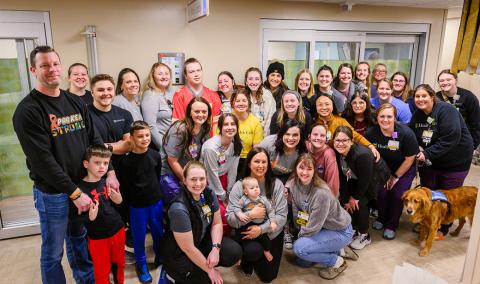
Because of the complexity of CP, MU Health Care offers team-based care for children with cerebral palsy to address all their needs in one place. Our Cerebral Palsy Clinic allows you and your child to see several providers during the same visit. Your child’s care team may include:

All these experts are available in our clinic at the Thompson Center for Autism and Neurodevelopmental Disorders, so you can see them during your regular visits.

Cerebral Palsy Symptoms

Signs of CP usually appear during infancy, although some kids may not be diagnosed until age two or older. Symptoms include:

  • Difficulty picking up small items, like a spoon or crayon
  • Exaggerated muscle reflexes
  • Excessive drooling
  • Favoring one side of the body when moving arms or legs
  • No muscle control (ataxia)
  • Stiff muscles
  • Swallowing problems
  • Tremors (involuntary movements)
  • Unsteady walking

Some children with cerebral palsy also present other issues, such as:

  • Intellectual disabilities
  • Mental health or developmental conditions
  • Epilepsy (seizures)
  • Scoliosis (spinal curvature)
  • Unusual touch or pain perceptions
  • Urinary incontinence (inability to control urine when age appropriate)
  • Vision or hearing issues

When to Get Help

If your child seems to have delayed development, it could be a sign of CP or another condition. Talk to your pediatrician if your child has not reached these milestones:

  • Sitting by six months old
  • Standing with support by 9 to 12 months old
  • Walking by 12 to 18 months old

You can reach out directly to make an appointment with our team. We can also provide second opinions if your child is diagnosed with cerebral palsy.

Types of Cerebral Palsy

Cerebral palsy differs from child to child. Some kids may only have mild symptoms that do not affect their ability to run and play. Others may have limited mobility and benefit from a wheelchair.

At MU Health Care, we specialize in treating all types of CP in children, including:

  • Spastic CP: Causes stiff muscles that lead to awkward body movements.
  • Ataxic CP: Affects balance and fine motor skills.
  • Dyskinetic CP: Causes muscle tone to vary from too tight to too loose, leading to uncontrollable movements.

Some kids have symptoms of more than one type of cerebral palsy.

Cerebral Palsy Diagnosis at MU Health Care

The symptoms of CP can be mistaken for other movement disorders, so getting an expert diagnosis is crucial to ensuring your child gets the care they need. We’ll work with you every step of the process, answering questions and offering support along the way.

What to Expect at Your First Appointment

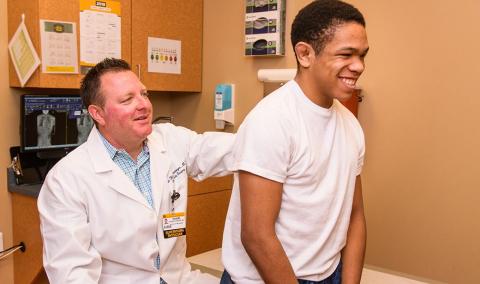
During your first visit, our team will take a detailed medical history of your child. We will also examine your child, which may include stretching their joints or watching them walk (if age appropriate). Our specialists may also evaluate how well your child can lift objects, feed themselves or perform other hand movements.

We may also recommend tests, such as:

  • Magnetic resonance imaging (MRI): A detailed brain scan that can detect brain damage or other issues that may cause cerebral palsy. To help your child remain still during an MRI, we may provide a mild sedative or anesthesia.

  • Electroencephalogram (EEG): Measures brain activity and detects epilepsy, which is common in kids with CP.
  • X-rays: Detect curvature in the spine, or hip or foot issues associated with cerebral palsy. 

  • Electromyography (EMG): Measures electrical activity in the muscles.
  • Nerve conduction study (NCS): Often performed with an EMG, an NCS can assess the health of nerves near the brain and spinal cord.
  • Genetic testing: Identifies gene mutations associated with CP through blood or saliva tests.
  • Other blood and urine tests: Help rule out other conditions that cause symptoms similar to cerebral palsy.

If we determine that your child has CP, we may refer you to other specialists for additional testing, such as:

  • Speech and language testing
  • Vision and hearing tests
  • Other tests to assess your child’s development, movement and intellectual capabilities

We will also use a rating scaled called the Gross Motor Function Classification System (GMFCS) to measure your child’s movement. This five-level system looks at your child’s sitting, walking and other movements to help guide treatment.

Cerebral Palsy Treatment at MU Health Care

Although there is no cure for CP, new treatments are improving the quality of life for many with the condition. Our team works together to develop a personalized treatment plan based on your child’s and family’s needs.

Nonsurgical Treatments for CP

Some of the nonsurgical treatments available for cerebral palsy include:

  • Braces: Help stretch muscles and improve stability.
  • Systemic medications: Help kids gain more control of their muscles and reduce pain. Some medications can also reduce muscle spasms and other CP symptoms.
  • Baclofen pumps: Deliver medicine directly into the fluid around the spinal cord to treat severe muscle stiffness and spasms.
  • Botox injections: Temporarily stops nerve input to a muscle, so it’s not as tight.
  • Physical therapy: Improves your child’s strength, flexibility, balance and mobility. Our kid-focused physical therapists can help your child move better at home, school and elsewhere. 
  • Speech-language therapy: Helps your child communicate better if they have difficulty with language.

Surgery for CP

Our surgeons offer the full range of options for CP, including:

  • Muscle-lengthening and tendon transfer surgery, which can improve your child’s mobility in the legs, hips and feet if they have contractures (tight muscles).
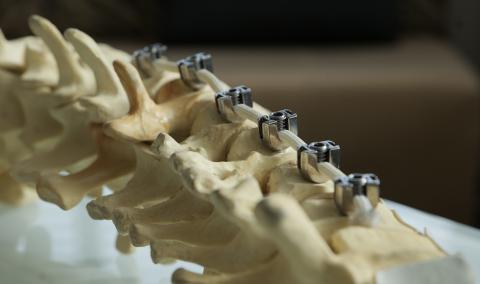
  • Spinal fusion for neuromuscular scoliosis, a spinal curvature affecting some kids with cerebral palsy.

  • Surgery to correct clubfoot, which can cause the foot to rotate inward at the ankle.
  • Surgery to treat hip dislocations and other hip issues in children with CP.

Transitioning to Adult Care

Because cerebral palsy is a lifelong condition, your child will continue to need specialized care as they progress into adulthood. Our pediatric CP team will help your child make the transition to adult care when they’re ready.