Achondroplasia is a form of dwarfism, or skeletal dysplasia. If your child was born with this genetic condition, expert medical care can help them lead long, healthy lives. At Children’s Hospital, we have the region’s only team of kid-focused experts who treat achondroplasia.

What is Achondroplasia, and What Causes It?

Achondroplasia is a genetic disorder that causes the most common type of dwarfism (short stature). This form of skeletal dysplasia is due to a mutation in the FGFR3 gene. The condition can run in families, although it most commonly occurs in babies with no family history.

New advances are helping kids live fuller lives. Treatments from pediatric orthopaedic surgeons at MU Health Care are also helping correct issues like kyphosis, bowed legs and spinal stenosis.


Our Approach to Treating Achondroplasia

Our team of experts includes:

Together, our team can support you and provide family-focused care as your child grows.

Signs of Achondroplasia

Infants and children with achondroplasia may have the following physical features:

  • Short stature
  • Large forehead
  • Underdeveloped middle of the face
  • Short fingers
  • Short upper arms and upper legs
  • Joint instability
  • Short torso
  • Swayback (lordosis) or hunchback (kyphosis)
  • Bowlegs

Most babies with achondroplasia are diagnosed before birth through ultrasound and amniocentesis (which tests fetal DNA), or shortly after birth.

Getting Help for Achondroplasia

Babies, children and teens with skeletal dysplasia may have complex medical needs. Some of these issues can cause pain or affect their ability to function.

If you’d like us to treat your child, you may get a referral from your child’s primary care provider. Or you can reach out to our team directly. We also provide second opinions if your child is being treated elsewhere and you want to know your options.

How We Treat Achondroplasia

Achondroplasia affects each child differently, which is why we use a personalized approach to treatment. As they grow, they can develop issues such as:

  • Kyphosis (hunchback), an outward curvature of the spine
  • Lordosis (swayback), an inward curvature of the spine
  • Weak muscle tone (hypotonia)
  • Bowlegs (genu varum)
  • Stiff elbows (elbow contractures)
  • Loose joints (hypermobility)
  • Too much fluid in the brain (hydrocephalus)
  • Premature closing of the bones of the skull (craniosynostosis)
  • Narrowing of the opening at the base of the skull (foramen magnum stenosis)
  • Narrowing of the spinal canal (spinal stenosis)

We can recommend nonsurgical and surgical options to manage these issues, based on your child’s needs and your family’s goals.

Surgical Options

We offer the complete range of advanced surgeries for achondroplasia, including:

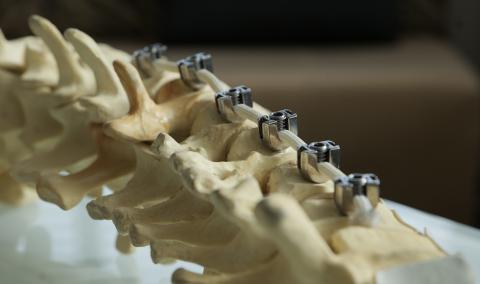
  • Spine surgery to correct thoracolumbar kyphosis or treat spinal stenosis
  • Corrective surgery for bowlegs
  • Limb-lengthening surgery, which involves implanting internal devices to lengthen bone from the inside of the body

Our skilled surgeons perform more of these advanced surgeries in kids with achondroplasia than any other center in the region.

Care Through the Transition to Adulthood

When your child is younger and growing rapidly, you’ll meet with us about every six months. To monitor your child’s growth, we may suggest routine X-rays and magnetic resonance imaging (MRI) scans if needed.

As your child gets older, we recommend that you meet with us once a year.

Your child may continue to need expert medical and surgical care once they become adults. At MU Health Care, we have a team of orthopaedic surgeons and other experts who treat adults with achondroplasia, so your family can have continuity of care all in one place.