Cerebral palsy (CP) is a group of conditions that affect your child’s movement and coordination. Because CP causes lifelong symptoms, it’s important that your child receives expert care from the start.
Cerebral palsy is usually caused by damage to a baby’s developing brain. Factors that can contribute to CP include:
- Complications during birth
- Premature birth
- Genetic mutations or inherited conditions
- Infections or toxic exposure during pregnancy
At MU Health Care, we treat all types of cerebral palsy in kids of all ages. Our team can work with you to help optimize your child’s function with the latest treatments.
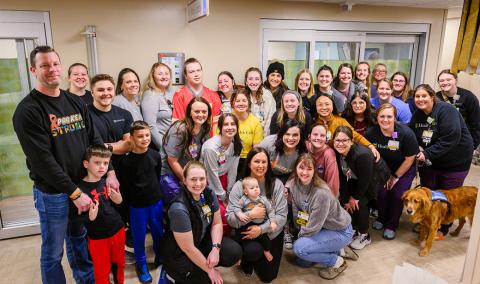
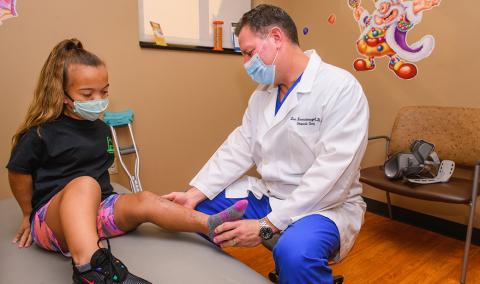
Because of the complexity of CP, MU Health Care offers team-based care for children with cerebral palsy to address all their needs in one place. Our Cerebral Palsy Clinic allows you and your child to see several providers during the same visit. Your child’s care team may include:
All these experts are available in our clinic at the Thompson Center for Autism and Neurodevelopmental Disorders, so you can see them during your regular visits.
Cerebral Palsy Symptoms
Signs of CP usually appear during infancy, although some kids may not be diagnosed until age two or older. Symptoms include:
- Difficulty picking up small items, like a spoon or crayon
- Exaggerated muscle reflexes
- Excessive drooling
- Favoring one side of the body when moving arms or legs
- No muscle control (ataxia)
- Stiff muscles
- Swallowing problems
- Tremors (involuntary movements)
- Unsteady walking
Some children with cerebral palsy also present other issues, such as:
- Intellectual disabilities
- Mental health or developmental conditions
- Epilepsy (seizures)
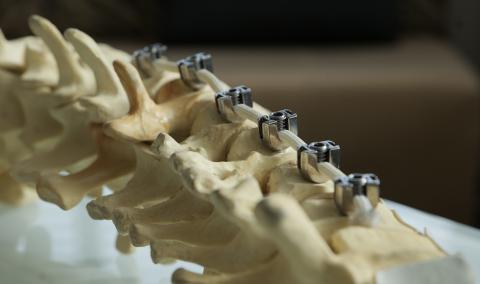
- Scoliosis (spinal curvature)
- Unusual touch or pain perceptions
- Urinary incontinence (inability to control urine when age appropriate)
- Vision or hearing issues
When to Get Help
If your child seems to have delayed development, it could be a sign of CP or another condition. Talk to your pediatrician if your child has not reached these milestones:
- Sitting by six months old
- Standing with support by 9 to 12 months old
- Walking by 12 to 18 months old
You can reach out directly to make an appointment with our team. We can also provide second opinions if your child is diagnosed with cerebral palsy.
Types of Cerebral Palsy
Cerebral palsy differs from child to child. Some kids may only have mild symptoms that do not affect their ability to run and play. Others may have limited mobility and benefit from a wheelchair.
At MU Health Care, we specialize in treating all types of CP in children, including:
- Spastic CP: Causes stiff muscles that lead to awkward body movements.
- Ataxic CP: Affects balance and fine motor skills.
- Dyskinetic CP: Causes muscle tone to vary from too tight to too loose, leading to uncontrollable movements.
Some kids have symptoms of more than one type of cerebral palsy.