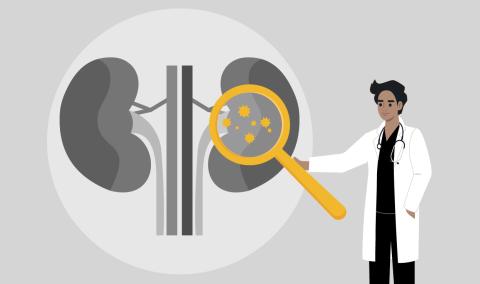
Kidney stones are common — and often extremely painful. At MU Health Care, we provide fast relief and personalized plans to help prevent future stones.

Kidney stones are hard mineral deposits that form inside your kidneys. They can cause intense pain and often come back or cause infections. In some cases, untreated stones can affect how well your kidneys work. 

At MU Health Care, we provide expert care focused on both immediate relief and long-term prevention. Our team helps you understand why the stones formed and how to lower your future risk.

Kidney Stone Symptoms

Kidney stone symptoms often begin suddenly. The pain can be severe and may come in waves.

Common symptoms include:

  • Sharp pain in the back, side or lower abdomen
  • Pain that spreads to the groin
  • Nausea or vomiting
  • Blood in the urine
  • Frequent or painful urination

However, some kidney stones cause no pain at all. A kidney stone often does not cause symptoms until it moves within the kidney or enters a ureter — the tube that connects the kidney to the bladder.

If the stone becomes stuck, it can block urine flow. This blockage may cause the kidney to swell and the ureter to spasm, leading to severe pain.

Some smaller stones pass on their own with mild to moderate discomfort. Others may require medication or a procedure to relieve the blockage and protect the kidney.

When to Seek Care for Kidney Stones

Kidney stones with mild and manageable discomfort can often be managed at home by drinking plenty of fluids. Seek care if you experience any of the following symptoms:

  • Persistent flank or back pain
  • Blood in your urine
  • Burning with urination
  • Recurrent kidney stone symptoms
  • Pain that lasts more than a day or two
  • A history of kidney disease or only one kidney

Seek medical attention right away if you experience:

  • Severe, unrelenting pain
  • Fever or chills
  • Difficulty urinating
  • Persistent nausea or vomiting

These symptoms may signal infection or obstruction, which require urgent care.

Types of Kidney Stones

Most stones form when minerals in the urine crystallize and stick together. Common types include: 

  • Calcium stones: The most common type, often made of calcium oxalate or calcium phosphate, and often linked to diet, dehydration or certain metabolic conditions.
  • Uric acid stones: More likely to form when urine is consistently acidic, which can be related to dehydration, high-protein diets.
  • Struvite stones: These develop in association with urinary tract infections and can grow quickly or become large.
  • Cystine stones: A rare type caused by a genetic condition that allows too much of the amino acid cystine to leak into the urine. 

Each type has different causes, which is why identifying your stone type helps guide both treatment and a personalized prevention plan.

Recurrent Kidney Stones

If you’ve had one kidney stone, you are more likely to develop another. Studies show there is a 35% to 50% chance of recurrence within five years without prevention strategies. Without a targeted prevention plan, stones may continue to form and cause repeated pain, ER visits or procedures.

Complex Kidney Stone Disease

Complex kidney stone disease involves large, multiple or irregularly shaped, or difficult-to-reach, stones. These stones can block urine flow, cause repeated infections or reduce kidney function over time. Stones larger than 2 centimeters or those with complex anatomy or metabolic issues often require advanced surgical treatment.

Kidney Stone Treatment at MU Health Care

Our goal is to relieve your pain, remove the stone (or help it pass on its own) and prevent another stone from forming. Some small stones pass on their own. Others require intervention to remove or break apart the stone.

Treatment options include:

  • Pain control and medications: Help manage discomfort and relax the ureter to allow smaller stones to pass.
  • Shock wave lithotripsy (SWL): Uses sound waves from outside the body to break stones into smaller pieces that pass naturally.
  • Ureteroscopy with laser lithotripsy: A small scope is passed through the bladder to locate and break up stones with a laser and remove all of the pieces
  • Percutaneous nephrolithotomy (PCNL): Removes large or complex stones through a small incision in the back.
  • Temporary ureteral stent placement: Keeps urine flowing and reduces pressure while swelling improves or infection clears. Commonly placed after the above procedures to allow the kidney to drain.

Kidney Stone Program

MU Health Care offers a dedicated Kidney Stone Program to streamline care for those with recurring stones or persistent symptoms. Through our specialized program, you can access expert evaluation and treatment without needing an emergency room visit. No referral is required. Once you reach out, our team reviews your information and determines next steps within 24 to 48 hours.

Beyond treating active stones, our program focuses on long-term prevention. We coordinate metabolic testing, stone analysis and dietary guidance, and collaborate with specialists in nephrology, endocrinology, nutrition and primary care to create a personalized plan that reduces your future risk.