If you’ve started turning up the TV, asking people to repeat themselves or feeling left out of conversations, hearing aids may be able to help you hear more clearly and stay connected.

At MU Health Care, we help you hear more clearly and stay connected with the people and moments that matter most. Hearing aids use state-of-the-art technology to make speech and sounds easier to understand.

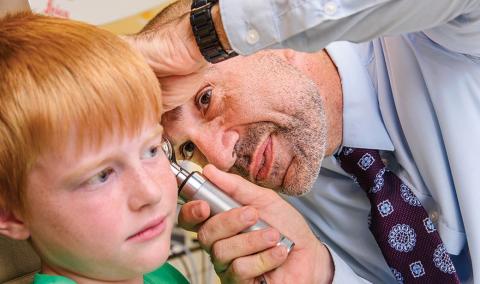
If you suspect hearing loss, your first step is a thorough hearing evaluation and medical examination. A certified audiologist performs detailed hearing tests, and your primary care provider or an ear, nose and throat (ENT) physician evaluates your overall ear health.

Our ENT, Hearing and Balance Center in Columbia offers advanced hearing rehabilitation technology personalized to your level of hearing loss. Our goal is to help you hear more clearly and feel confident in your everyday life.

How Hearing Aids Work

Hearing aids are small electronic devices that make sound clearer and easier to understand. They are commonly used for hearing loss related to aging, noise-induced hearing damage and other conditions that make speech harder to understand.

While hearing aids do not restore normal hearing, they significantly improve your ability to hear speech and environmental sounds.

Modern hearing aids use digital processing to match amplification to your specific hearing loss pattern. Your audiologist adjusts sound intensity based on your hearing test results to address your individual hearing needs.

Today’s hearing aids can:

  • Automatically adjust to different listening environments
  • Connect wirelessly to phones, televisions and other devices
  • Enhance speech while softening sudden loud sounds
  • Reduce background noise in busy places

Hearing aids may help if you are:

  • Asking people to repeat themselves often
  • Straining to hear television or phone calls
  • Having trouble following conversations in restaurants or group settings

Types of Hearing Aids at MU Health Care

At MU Health Care, we offer the latest FDA-approved hearing aid technology. As new advancements become available, we make them accessible to you.

Our audiology team includes highly trained, experienced specialists dedicated to hearing rehabilitation. We tailor technology to your hearing loss, communication needs and lifestyle.

Hearing aid styles may include:

  • Behind-the-ear (BTE)
  • Custom-molded devices designed for your ear anatomy
  • In-the-ear (ITE)
  • Receiver-in-canal (RIC)

Technology features may include:

  • Bluetooth connectivity for streaming calls and media
  • Directional microphones for improved speech clarity
  • Rechargeable batteries
  • Tinnitus masking features, when appropriate

If your evaluation shows you may benefit from hearing aids, your audiologist will schedule a consultation. During this appointment, you will:

  • Compare which hearing aid options are most appropriate for your hearing needs and lifestyle
  • Determine which device most effectively enhances your level of hearing
  • Review features, technology levels and comfort considerations

Sometimes additional testing is performed to determine which hearing aid best improves your hearing clarity — not just volume.

Our Approach to Hearing Aids

At MU Health Care, your hearing care begins with understanding exactly what you need from hearing rehabilitation. We carefully assess the extent of your hearing loss and which ear(s) is affected.

After a certified audiologist performs your hearing evaluation, you may need a medical examination by an ENT physician. Your audiologist reviews the results with your physician to determine the most appropriate next steps.

If hearing aids are recommended, we guide you through the process from evaluation to fitting to follow-up care. If needed, additional testing such as lab work or imaging may also be recommended by your physician.

We want you to leave with more than a device. We want you to feel informed, supported and confident using it in everyday life.

What to Expect with Hearing Aids

Choosing hearing aids is an important milestone. We take the time to explain each step, so you feel comfortable and confident in your care.

Hearing Aid Evaluation

If a hearing aid is recommended after your medical evaluation, your audiologist will carefully review what comes next and answer your questions.

During this visit, we will:

  • Explain the hearing aid process
  • Make impressions of your ears if necessary
  • Schedule a fitting appointment

Hearing Aid Fitting

At your fitting appointment, your hearing aids are customized specifically for you.

At this visit, your audiologist will:

  • Show you how to use the hearing aid
  • Describe the adjustment period and limitations
  • Discuss care and maintenance
  • Program the device to ensure you can hear and understand speech
  • Share communication tips for you and your family

Adjustment takes time. Your brain needs time to adapt to amplified sound, and we’ll guide you through this transition.

Follow-Up Care

Ongoing follow-up visits help you continue to hear your best. It is recommended to follow up within the first 30 days, and adults should return annually while children should return every six months.

During follow-up visits, your audiologist will:

  • Assess the benefits from the hearing aid
  • Confirm the device is working properly
  • Evaluate whether your hearing has changed
  • Provide counseling for you and your family