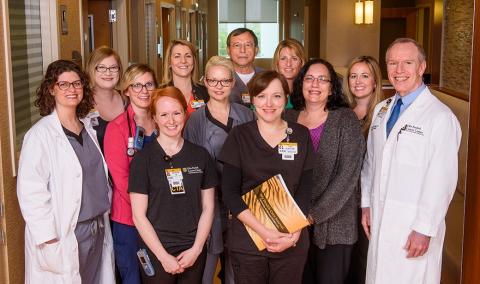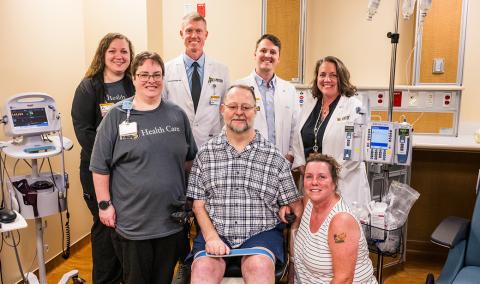
If you or your child needs a kidney transplant, MU Health Care offers trusted expertise and lifelong support from some of the most experienced specialists in the country.
Starting the journey toward a kidney transplant is a life-changing decision, and we’re here to help you feel informed, supported and ready for every step.
A kidney transplant may be recommended by your care team when your kidneys can no longer filter waste the way they should (i.e., end-stage renal disease, or ESRD).
Our nephrologists — doctors specializing in kidney health — can guide you through this process, monitor your kidney function and discuss treatment options like dialysis and transplant. Although it may be possible to remain on dialysis for many years, it’s not a cure for kidney disease.
If a transplant is the best option for your long-term health, MU Health Care offers care and expertise around the clock. Our team is here to answer your questions, ease concerns and provide lifelong support — before, during and long after surgery.
Kidney Transplant Treatment at MU Health Care
If you’re living with end stage renal disease or kidney failure, a transplant may offer a path to better health and long-term wellness. Our experienced team provides advanced kidney transplant care designed around your needs.
Causes of Kidney Failure
Kidney failure can result from many conditions, including:
- Diabetes: A disorder of insulin function that affects the function of kidneys, pancreas and other organs.
- Hypertension: Damage to the kidneys caused by high blood pressure.
- Glomerular diseases: Diseases that affect the glomeruli, which is the filter of the kidneys.
- Polycystic kidney disease: A genetic disease of the kidneys that causes multiple cysts in the kidneys.
- Obstruction of the kidneys: Long-term blockage of the kidneys, including an enlarged prostate or kidney stones, that can cause failure.
- Autoimmune diseases: Diseases that attack the body and can affect the kidneys, including conditions such as lupus or interstitial nephritis.
- Medications: Certain medications can cause the kidneys to fail over time.
- Renovascular disease: Blockages of the blood flow to the kidney can cause the kidneys to fail over time.
- Congenital or familial diseases: Certain genetic conditions can affect the kidneys, leading to failure.
Am I a Candidate for a Kidney Transplant?
You may be a candidate for a kidney transplant if you’re living with kidney disease. However, not everyone with kidney disease needs or qualifies for a transplant, which is why we evaluate your needs on an individual basis.
You may be considered for a kidney transplant if:
- You’ve been diagnosed with ESRD or chronic kidney disease stage 5, or you’ve had a rapid decline in kidney function prior to starting dialysis.
- You’re in overall good health and can undergo surgery.
- You’re committed to lifelong follow-up care and medication management.
Our team will go over what to expect if you are considering a kidney transplant, so you can make an informed decision about your care. We are here to answer all your questions.
Our Approach to Kidney Transplant
Since 1972, we’ve performed more than 1,000 kidney transplants at MU Health Care, with outcomes that consistently exceed national averages.
Our average kidney transplant acute rejection rate is less than 10%, which is better than the national average of approximately 15%.
In the past five years, we’ve also shortened hospital stays and improved recovery times so you can start feeling better sooner.
Living Kidney Donor Program
For patients with end-stage renal disease, treatment options include dialysis or a kidney transplant from a deceased donor or living donor.
Our Living Kidney Donor Program offers significant advantages for those receiving a living donor transplant:
- Wait times are reduced from years to months, often helping recipients avoid dialysis.
- Living donor kidneys have higher success rates and tend to last longer than those from deceased donors.
- Outcomes are more predictable with kidneys from living donors.
Our Care Team Focuses on Your Success
We understand how life-changing a kidney transplant can be. To make sure transplant is the right option for you, we perform a thorough evaluation.
Our kidney transplant program brings together expert care, advanced research and trusted resources to support both children and adults.
Depending on your needs, your care team may include:
- Transplant surgeons
- Transplant nephrologists
- Pre- and post-transplant coordinators
- Nurse
- Social workers
- Registered dietitians
- Financial coordinators
- Living donor advocates
- Other kidney transplant-trained specialists
What to Expect With Kidney Transplant
Once referred through your nephrologist, dialysis or yourself, you will have a full evaluation by our transplant team, including any tests or labs needed to determine whether you are a kidney transplant candidate.
If approved, you will be placed on the national wait list through the United Network of Organ Sharing (UNOS). Your kidney transplant coordinator will keep you informed and help you stay “transplant ready” with regular updates and support.
If you have a living donor, you will not need to wait for a donor, which can dramatically cut your wait time from years to a few months.
While you wait for a kidney transplant, staying healthy is key. It is important to update the transplant team about changes to your health, and take advantage of expert support available at MU Health Care, including nutrition guidance from our dietitians and resources like the My Transplant-Ready Workbook.
Once a match is found, we’ll immediately bring you into the hospital and perform your surgery. We will support your recovery in the hospital and at home.
After transplant, you’ll have close follow-up care to monitor your new kidney, manage medications and support your physical and emotional well-being. We stay involved for life, because protecting you and your transplant is our priority.
Why Choose MU Health Care for Kidney Transplant
- The most experienced teams in the region: Since 1972, we’ve performed more than 1,000 kidney transplants, with outcomes that consistently exceed national averages, including an acute rejection rate below 10%.
- Expert care for adults and children: We offer transplant services for pediatric and adult patients. Our kidney-only focus allows us to create a personalized and specialized plan for each patient.
- Advanced kidney transplant options: From minimally invasive living-donor transplant techniques to steroid-free immunosuppression protocols, we offer modern approaches designed to improve outcomes.
- Team-based support: Your care team includes transplant surgeons, nephrologists, coordinators, dietitians, social workers and more — all working together to support your health, now and in the years ahead.
- The academic advantage: As part of the region’s only academic health system, our team contributes to research that improves care — including making it easier to continue using vital medications after your kidney transplant.