If dizziness, vertigo and balance problems are impacting your daily function, we can help identify the cause and guide your recovery through our vestibular services.

MU Health Care offers specialized care for conditions affecting your balance. Our audiology team focuses on clear answers, personalized vestibular testing and long-term support.

Our Approach to Vestibular Services

The vestibular system, located in the inner ear, communicates with your central nervous system about where you are located and how you’re positioned, so you can remain balanced while your eyes and body move.

If something disrupts the vestibular system, your brain can't properly make sense of your location, and you may experience a range of symptoms, including vertigo, disequilibrium, nausea or anxiety. MU Health Care offers a variety of testing and treatment options for vestibular disorders.
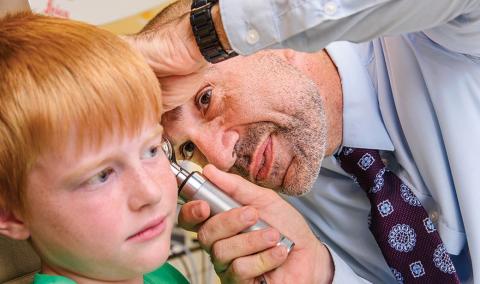
Because dizziness and balance disorders often involve more than one system in the body, our vestibular services involve collaboration across multiple specialties. Vestibular audiologists, ENTs and physical therapists work together to evaluate your balance function and interpret results.

When appropriate, care is coordinated through our dizzy clinic, where multiple specialists see patients at the same time. This team-based approach allows us to move from testing to treatment with clarity and continuity.

Conditions We Treat

Dizziness and balance symptoms can show up in different ways, from a spinning sensation to changes in hearing or ringing in the ears. If symptoms occur more than once a week, worsen over time or appear suddenly, our specialized vestibular services can help identify the cause.

We treat the following conditions:

  • Benign paroxysmal positional vertigo (BPPV): A common cause of vertigo that occurs when tiny crystals in the inner ear move out of place, triggering spinning sensations with head movement.
  • Labyrinthitis: Inflammation of the inner ear that can cause dizziness, balance problems and changes in hearing. Treatment may focus on hearing care and vestibular therapy.
  • Ménière’s disease: A condition affecting fluid balance in the inner ear, leading to episodes of dizziness, hearing loss and ringing or roaring sounds.
  • Peripheral vestibular weakness or vestibulopathy: Occurs when one or both inner ears are not sending accurate balance signals to the brain, which can cause ongoing dizziness or unsteadiness.
  • Superior canal dehiscence (SCD): A rare condition caused by thinning or opening of the bone between the inner ear and brain. Diagnosis typically involves specialized imaging.
  • Vestibular migraine: A type of migraine that can cause dizziness or balance symptoms with or without a headache.
  • Vestibular neuritis: Inflammation of the vestibular nerve that can lead to sudden dizziness, vertigo and balance difficulties.

Vestibular Tests and Treatments

Our vestibular services include advanced diagnostic tools to evaluate how your balance system functions and where disruption may be occurring:

  • Posturography (Virtualis): Tests sensory organization, adaptation and motor control to evaluate how your brain, inner ear, eyes and body work together to maintain balance.
  • Rotary chair testing: Uses gentle, controlled motion and specialized goggles to measure how your inner ears and eyes respond to movement.
  • Vestibular evoked myogenic potentials (cVEMP and oVEMP): Measures how specific inner ear structures respond to sound and vibration.
  • Videonystagmography (VNG): Tracks eye movements while your body and head are placed in different positions.
  • Caloric testing: Gently stimulates the inner ear to measure balance function and response. 

Testing is usually completed in two separate appointments, two hours each. Your care team will determine which tests are appropriate based on your symptoms and tolerance.

Patient Support Before and After Testing

For vestibular testing, our team focuses on preparation, comfort and follow-through. Before your appointment, a team member will call to answer questions and provide clear instructions.

Testing is conducted at a pace you can tolerate, and we coordinate follow-up care and therapy to ensure continuity and support.

Treatment Options

  • Vestibular rehabilitation therapy: Specialized physical therapy is the primary treatment for many vestibular disorders. Therapy focuses on reducing symptoms and helping the brain adapt or compensate for balance changes.

  • Care coordination and follow-up: Based on test results, your ENT specialist may recommend additional evaluation, imaging or other interventions.