Carotid artery disease can raise your risk of stroke, but with early detection and expert care, you can lower that risk and protect your health.
Your carotid arteries — located on the sides of your neck — deliver blood to your brain. As you age, fatty deposits called plaque can build up and narrow these arteries.
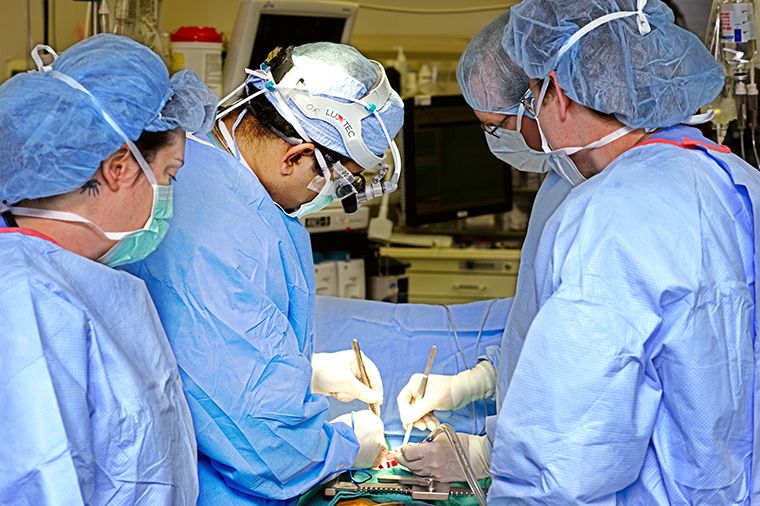
At MU Health Care, we personalize treatment to your artery anatomy, medical history and personal risk factors. Our vascular surgeons offer a full range of surgical and minimally invasive options, including transcarotid artery revascularization (TCAR) with flow reversal, to safely restore blood flow and reduce stroke risk.
If you’re traveling from outside mid-Missouri, we’ll help coordinate your testing, appointments and follow-up to make care simpler. And, as an academic health system, we bring together specialists and research-driven expertise to deliver care tailored to you.
Our Approach to Carotid Artery Disease Care
At MU Health Care, our vascular specialists use advanced imaging and minimally invasive procedures to restore blood flow, lower stroke risk and help you stay healthy. We work with experts from different fields to ensure you receive complete care that meets all your needs.
Carotid Artery Disease Symptoms
Carotid artery disease often develops without warning signs.
For many people, the first symptom is a stroke or a transient ischemic attack (TIA), also called a “mini-stroke,” and requires immediate medical care.
When symptoms do appear, they may include:
- Blurred or double vision
- Dizziness or loss of balance
- Drooping on one side of the face
- Numbness or weakness in the face, arms or legs, especially on one side
- Sudden confusion or trouble speaking
- Trouble understanding speech
When to Call Your Doctor
If you notice sudden changes in speech, vision, balance or strength, call 911 right away. These may be signs of a stroke or TIA.
Even if symptoms go away quickly, it’s important to be evaluated, as a TIA can be an early warning sign of a future stroke.
Carotid Artery Disease Risk Factors
Several conditions can raise your risk of plaque buildup in the carotid arteries, including:
- Diabetes
- Family history of carotid artery disease
- High blood pressure
- High cholesterol
- Smoking
If you have one or more of these risk factors, talk with your doctor about whether screening is right for you.
How We Diagnose Carotid Artery Disease
Our vascular surgeons lead your care, collaborating with cardiologists and other specialists to evaluate your risk and plan next steps.
We start by reviewing your health history and any symptoms, such as vision changes, weakness or a prior stroke or TIA (mini-stroke).
To diagnose carotid artery disease, we may recommend:
- Cardiac stress testing: Evaluates your heart health before any procedures, if needed.
- Doppler ultrasound: A noninvasive test uses sound waves to check blood flow and identify narrowing or blockages.
- High-resolution CT angiogram: Provides detailed 3D images of your arteries and any narrowing.
We also offer telehealth visits to review imaging results and coordinate care, helping you avoid long travel when possible. If you already had imaging done elsewhere, we’ll review those results to streamline your next steps.