If you have an increased risk of developing breast cancer, MU Health Care's High-Risk Breast Clinic can help you plan your next steps confidently.
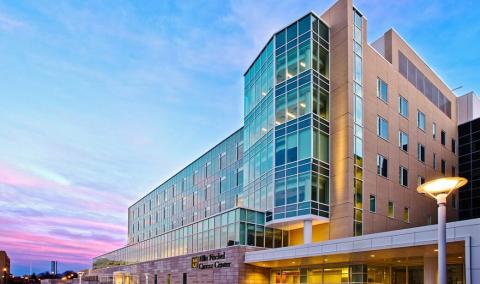
We offer risk assessment, screening, prevention and cancer care, all personalized to your needs, at our cancer centers in Columbia and Jefferson City.
On average, one in eight women will develop breast cancer in their lives. But some women are at higher risk due to a combination of factors that can be managed, watched closely and addressed with preventative treatments or early intervention.
The latest guidelines recommend that women at high risk for breast cancer begin screening at age 30, often with annual MRI and mammogram.
Our High-Risk Breast Clinic supports women who are more likely to develop breast cancer, through additional screenings, a personalized care plan and access to providers who specialize in breast cancer prevention and treatment.
As mid-Missouri's only nationally accredited breast center, we bring the highest level of breast cancer care closer to home.
And as an academic health system, we follow the latest screening guidelines and offer leading treatments and clinical trials.
What Is My Breast Cancer Risk?
Knowing your risk of breast cancer is an important step toward early detection and lowering your risk. For most women, this starts with a mammogram. If you have never received a mammogram, MU Health Care offers convenient, same-day mammograms in Columbia and Jefferson City that take minutes and are usually covered by insurance.
During your mammogram, a member of our team will ask questions about your personal and family history. While your mammogram is being interpreted, your provider will also calculate your lifetime risk of developing breast cancer using the Gail model, Tyrer-Cuzick calculator and BRCAPro.
Some factors that increase the risk of breast cancer include:
- Previous breast or ovarian cancer
- A family history of breast cancer, especially in close female relatives (mother, sister)
- A family history of ovarian cancer
- Specific genetic mutations such as BRCA1 and BRCA2
- Dense breast tissue
- Early menarche (first period before age 12) or late menopause (after age 55)
- Known exposure to chest radiation before age 30
- Atypical hyperplasia, or abnormal cells found in biopsies
- Lifestyle factors including smoking, drinking, overweight and lack of exercise
Having one or more risk factors doesn't necessarily mean you'll develop breast cancer. A formal risk assessment can help us understand how these factors work together.
Women who have a 20% or greater lifetime risk of developing breast cancer are considered high risk and may benefit from additional screening.
How Do I Know If I Am High Risk?
When you receive the results of your annual mammogram in the patient portal, you will also receive a notification about your risk score.
If you are high risk, our breast cancer team will send you a letter, electronically or physically, that tells you your risk score.
High-risk patients may be eligible for additional screening and evaluation services.
Patients considered high-risk may receive a phone call after their mammography results asking if they would like an appointment with the High-Risk Breast Clinic. You can also ask your primary care provider for a referral or self-refer.
To refer yourself for an appointment with the High-Risk Breast Clinic in Columbia, please call 573-882-8511.
To refer yourself for an appointment with the High-Risk Breast Clinic in Jefferson City, please call 573-632-5701.
Your Personalized Breast Cancer Prevention Plan
Screening is only one part of high-risk breast care. During your initial consultation with our High-Risk Breast Clinic, a member of our team will sit down with you to talk about what it means to be high risk, ways to reduce your risk and answer your questions. Together, we'll develop a plan based on your risk factors and preferences.
Depending on your needs, your plan may include:
- Lifestyle changes that may help lower breast cancer risk
- More frequent or additional breast imaging
- Medication to reduce breast cancer risk (chemoprevention)
- Genetic counseling or testing
- Risk-reducing surgery
Our team is here to guide you through your options so you can make informed decisions about your care.
What Happens If We Find Something?
If a screening test or breast exam finds an area that needs a closer look, you won't have to navigate the next steps on your own.
At MU Health Care, we offer the latest and most up-to-date diagnostic tools, including:
- Diagnostic breast MRI
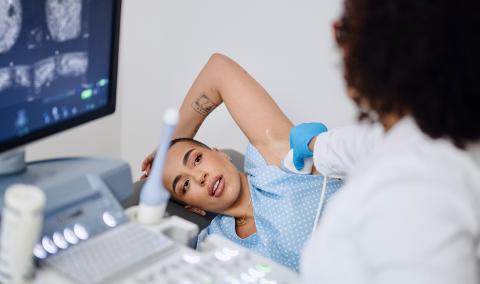
- Breast ultrasound
- Image-guided breast biopsy
Our team helps you understand and get insurance coverage for additional screenings. Many women who are classified as high risk have appointments every six months and receive a clinical breast exam and either a mammogram or an MRI.
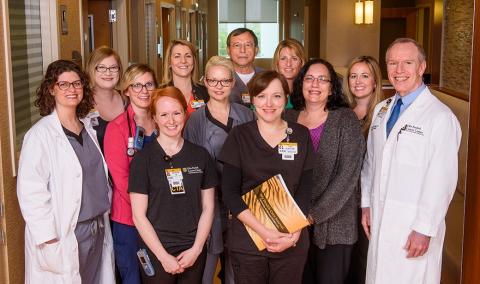
If testing finds breast cancer, we'll connect you directly with our breast cancer specialists. Your care team may include breast surgeons, medical and radiation oncologists, radiologists and plastic surgeons who work together to develop your treatment plan.
Why Choose MU Health Care for High-Risk Breast Cancer Care
At our cancer centers in Columbia and Jefferson City, MU Health Care brings expert care closer to home.
- Nationally recognized care: As the region's only breast cancer center accredited by the National Accreditation Program for Breast Centers, MU Health Care provides the highest standard of patient care for breast cancer.
- Advancing cancer care: MU Health Care offers clinical trials and cancer research opportunities, which means patients have access to the latest advancements and guidelines in cancer screening and cancer care.
- Specialized breast cancer teams: You'll receive care from dedicated experts at Ellis Fischel Cancer Center in Columbia and Goldschmidt Cancer Center in Jefferson City. These teams include fellowship-trained specialists who are experts in breast cancer care.