If your heart feels like it’s skipping, racing or out of sync, it could be an arrhythmia. We provide expert testing and personalized treatment to help manage and relieve symptoms and keep your heart on the right beat.

An arrhythmia, or heart rhythm disorder, is a problem with the heart’s electrical system that causes it to beat too fast, too slow or irregularly. Some arrhythmias don’t cause issues, but others can increase your risk for more serious complications such as stroke, heart failure or sudden cardiac death.

At MU Health Care, our electrophysiology team specializes in diagnosing and treating all types of arrhythmias. We create a personalized care plan based on your health history, lifestyle and goals. 

As an academic health system, we also participate in national and international studies — including RADIATE VT, Librexia-AF and preference trials — giving patients access to promising, research-based therapies.

Whether you need routine monitoring or advanced procedures, we have the expertise and treatments to manage your symptoms and support your heart health.

Arrhythmias We Treat

At MU Health Care, our cardiac electrophysiologists diagnose and treat all types of heart rhythm disorders. The most common include:

  • Atrial fibrillation (AFib)
  • Supraventricular tachycardia (SVT)
  • Ventricular tachycardia (VT)

AFib

Atrial fibrillation is the most common type of heart rhythm disorder. It happens when the electrical signals in your heart become irregular, causing the upper chambers (atria) to quiver instead of beat normally.

When this happens, blood may pool in the atria and form clots that can travel to the brain and cause a stroke. Over time, AFib can also weaken the heart muscle and lead to heart failure.

AFib is often linked to heart valvular conditions, high blood pressure, cardiac muscle disease, inherited diseases and sometimes runs in families.

SVT

Supraventricular tachycardia causes sudden episodes of rapid heartbeat — often 150 to 220 beats per minute — even when at rest. These episodes happen when the upper chambers of the heart send abnormal electrical signals that make it beat too quickly.

You may feel palpitations for a few minutes or several hours. Symptoms can include:

  • Chest pain
  • Fatigue
  • Feeling lightheaded, dizzy or faint
  • Shortness of breath 

SVT is the most common arrhythmia in infants and children and is more common among women and pregnant women than men.

You should talk to your doctor if you notice frequent heart flutters or rapid heartbeats. Call 911 if rapid heartbeats occur along with chest pain, dizziness, weakness or shortness of breath.

VT

Ventricular tachycardia occurs when the lower chambers of the heart (ventricles) beat faster than normal — often over 100 beats per minute. Because the heart beats too quickly, it can't pump enough blood to the body. This can result in sudden cardiac death.

VT is typically linked to other heart conditions. While it is more common in adults over 50, it can occur in younger individuals as an inherited disorder. If untreated, VT can lead to sudden cardiac arrest. 

Call 911 immediately if you experience: 

  • Difficulty breathing
  • Fainting
  • Lasting chest pain

How We Treat Arrhythmias

Our goal is to keep your heart beating normally and protect your health.

Because every heart rhythm problem is different, we offer a full range of treatments for arrhythmia.

Medication Management

For many people, medications can effectively control symptoms and reduce the risk of stroke or heart failure without the need for a procedure.

We offer the full range of heart rhythm medications, including: 

  • Antiarrhythmic drugs: Regulate sodium or potassium channels to restore rhythm
  • Beta blockers: Slow heart rate by blocking adrenaline
  • Blood thinners: Prevent clots and lower stroke risk in patients with AFib
  • Calcium channel blockers: Reduce the intensity and speed of each beat

Our electrophysiologists also study new medications that may provide more effective rhythm control in the future.

Advanced Ablation Options

Catheter ablation is a minimally invasive treatment that targets the precise area of heart tissue triggering abnormal rhythms. A thin catheter is guided to the heart through a small incision in the groin. This allows your doctor to study and treat the arrhythmias with heat, cold therapy or energy pulses (electroporation).

At MU Health Care, we offer three types of ablation procedures:

  • Cryoablation: Freezes faulty cells using cold energy
  • Pulsed field ablation (PFA): A newer technique that uses electric pulses to destroy abnormal tissue without harming nearby structures
  • Radiofrequency ablation: Uses controlled heat to scar the target area and stop abnormal signals

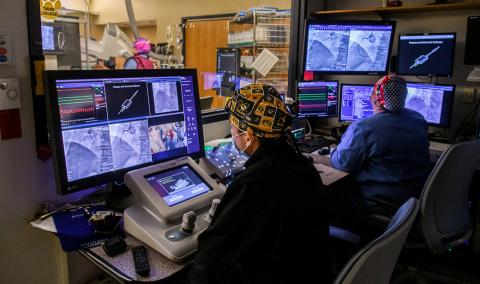
All ablations are performed in our specialized electrophysiology (EP) labs. You may go home the same day or after an overnight stay. We use cardiac MRI and echo guidance to plan and perform your procedure, minimizing exposure to contrast dye or radiation.

Left Atrial Appendage (LAA) Closure

If you are not a candidate for long-term blood thinners, we offer left atrial appendage (LAA) closure, a minimally invasive option to reduce your risk of stroke.

During this procedure, we seal off the small outpouching in the left upper chamber where most clots form. MU Health Care is the only hospital in the region that offers this treatment. After a six-week healing period, you may be able to stop or reduce blood thinner usage with follow-up care from our team.

Pacemakers and Defibrillators

For certain arrhythmias — especially those linked to slow heart rates or dangerous rhythms — we may recommend an implanted device, such as:

  • Implantable cardioverter-defibrillators (ICDs): Detect and stop dangerous arrhythmias
  • Leadless pacemakers: Smaller, wire-free devices implanted directly into the heart that are only available at select centers like MU Health Care
  • Traditional pacemakers: Correct slow or irregular heartbeats 

If you receive a device, you’ll return for regular checkups. Many pacemakers and ICDs can send data directly to your care team through your phone or our HEALTHConnect online patient portal.

What to Expect With Arrhythmia Care

From your first visit to recovery, our team helps you understand every step.

Before Your First Appointment

Whether you are referred to us by another provider or self-refer, we will review your previous records and prior test results in advance.

At Your First Visit

During your first visit, we’ll take 45 to 60 minutes to talk through your health history, explain how your heart’s electrical system works and order any needed tests. These may include an echocardiogram (ECG), cardiac MRI or CT, event monitor or genetic testing.

If a Procedure Is Right for You

We’ll discuss all your options and what to expect. Procedures such as ablation, LAA closure or device implantation are minimally invasive and done in our specialized labs. You may go home the same day or after one night.

After Your Procedure

You’ll receive clear instructions for recovery, medications and follow-up. We use evidence-based monitoring to track results, and you may have additional imaging or device checks to make sure you’re improving.

Ongoing Care

Our team stays connected between visits. Many cardiac devices securely share data with your care team through your phone or our HEALTHConnect online patient portal, so your progress is always monitored.