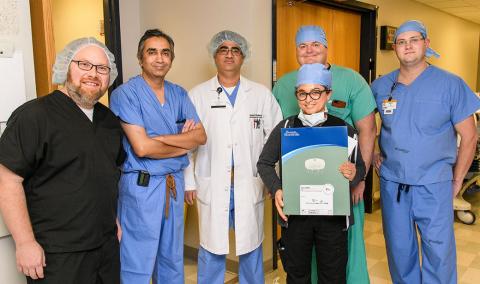
An aortic aneurysm is a serious condition in which the aorta, the body’s main artery, becomes enlarged or weakened. Our experienced team provides expert care and advanced treatments to monitor, manage and treat aortic aneurysms, keeping you safe.
Aneurysms can develop anywhere along the aorta, most often in the chest or abdomen. They may show up during a routine scan or cause sudden symptoms.
At MU Health Care, our vascular and cardiac surgeons work together to diagnose and treat both thoracic (chest) and abdominal aortic aneurysms. When immediate care is needed in the case of an aortic rupture, our team is prepared to act quickly to restore healthy blood flow and avoid complications.
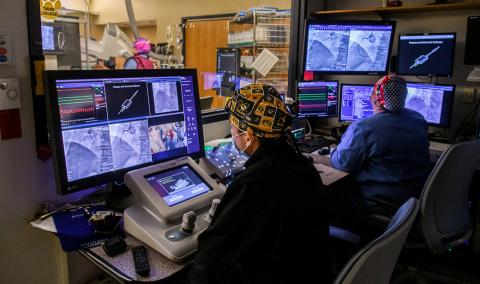
You’ll have access to advanced imaging, minimally invasive procedures and national clinical trial devices not widely available at other hospitals. And our hybrid operating rooms allow us to perform precise, minimally invasive repairs, even in emergencies.
Our Approach to Aortic Aneurysm Care
An aortic aneurysm doesn’t always cause symptoms, but it can be life-threatening if it ruptures.
At MU Health Care, our vascular and cardiac specialists work together to monitor, manage and treat all types of aortic aneurysms.
Aortic Aneurysm Symptoms
Symptoms of an aortic aneurysm may not appear until it becomes large or ruptures. When symptoms appear, they may include:
- A pulsing sensation near the belly button
- Back, chest or abdominal pain that may be constant or severe
- Hoarseness, cough or upper chest pain
- Shortness of breath or trouble swallowing (with thoracic aneurysms)
- Sudden, severe pain in the chest or abdomen — a sign of possible rupture that requires immediate emergency care
When to Call Your Doctor
Because aneurysms can grow without symptoms, early detection is important, especially if you have:
- Atherosclerosis, or hardening of the arteries
- Connective tissue disorders, such as Marfan syndrome or Ehlers-Danlos syndrome
- Family history of aortic aneurysm
- High blood pressure
- Infections involving the aorta
- Older age, as artery walls stiffen over time
- Prior traumatic injury to the chest or abdomen
- Smoking, current or past
If you suddenly have intense pain in your chest, back or abdomen, especially if it comes on quickly and doesn’t go away, call 911 or go to the nearest emergency room. These symptoms may point to a rupture, which requires immediate attention.
Types of Aortic Aneurysms
Aortic aneurysms are named for where they occur along the aorta, the body’s largest artery.
- Abdominal aortic aneurysm (AAA): Develops in the part of the aorta that passes through the abdomen. Symptoms may include back or belly pain and a pulsing sensation near the belly button. Treatment often involves a minimally invasive procedure called endovascular aneurysm repair (EVAR) to reinforce the weakened section and restore blood flow.
- Thoracic aortic aneurysm (TAA): Forms in the section of the aorta that runs through the chest. These aneurysms may cause chest or back pain, shortness of breath or difficulty swallowing. Treatment often involves thoracic endovascular aortic repair (TEVAR), a minimally invasive procedure that supports the aortic wall with a stent graft.
Your care team will monitor the aneurysm’s size and growth to determine the best time for treatment.
How We Diagnose Aortic Aneurysms
Our specialists use advanced imaging and screening tools to detect aortic aneurysms early and guide precise treatment. We’ll start by reviewing your medical history, risk factors and any symptoms. Depending on your needs, we may recommend several tests to make a diagnosis:
- CT scans: Show the exact size, shape and location of the aneurysm.
- Echocardiogram (echo): Checks how well your heart and aorta are functioning.
- Cardiac stress testing: Evaluates your overall heart health before treatment.
- Ultrasound imaging: This radiation‑free test checks your abdomen for any bulges or weak areas. This noninvasive test helps your doctor measure the aneurysm and track its size over time.
When possible, we will review any imaging you have gotten elsewhere before your first visit and may arrange follow-up scans closer to home, reducing unnecessary travel and repeat tests.