Your chest protects vital organs that help you breathe, eat and move. When something isn’t working as it should, our thoracic surgeons are here to help.

MU Health Care offers a full range of thoracic surgery options, including minimally invasive options and robotic techniques that can help you heal faster.

Our specialists treat conditions of the heart, lungs, chest wall and esophagus with advanced tools and techniques.

From common conditions to complex cases, our team is here to guide you with clear answers and personalized care.

Our Approach to Thoracic Surgery

We care for people with cancer, chest injuries and other thoracic conditions ranging from common concerns to complex problems like tumors, airway disorders and chest wall disorders.

Our thoracic surgeons work closely with pulmonologists, radiologists, gastroenterologists and cancer specialists to build the best plan for you.

Whenever possible, we use minimally invasive techniques — including robotic surgery — to reduce pain and help you recover faster. We also offer thoracoscopic and endoscopic procedures, giving you access to a full range of surgical options all in one place.

We also welcome second opinions and routinely review outside imaging. Our team works with your referring provider to make sure you understand every option and receive complete care.

Thoracic Conditions We Treat

We care for a wide range of chest conditions, from structural problems to complex cancers

Conditions we commonly treat with thoracic surgery include:

  • Airway compression or structural airway disorders
  • Barrett’s esophagus
  • Chest wall disorders or trauma
  • Diaphragm conditions that affect movement or breathing
  • Esophageal cancer
  • Excessive sweating (hyperhidrosis) in the hands, feet or underarms
  • Lung cancer and pulmonary nodules
  • Mediastinal cysts, masses or tumors
  • Pectus excavatum (sunken chest)
  • Pleural effusions or empyema
  • Spontaneous pneumothorax or recurrent collapsed lung
  • Tracheal disorders (if confirmed within scope)

Thoracic Tests and Treatments

We first use imaging, pulmonary function tests and minimally invasive procedures to understand your condition.

If you need thoracic surgery, we’ll explain each option clearly, including what recovery may look like and how we’ll support you.

Tests and treatments we offer include:

  • Bronchoscopy: A thin tube (bronchoscope) is inserted through the nose or mouth to examine the lungs and airways, diagnose lung conditions, take tissue samples (biopsies), remove blockages and treat airway issues.
  • Chest tube placement (thoracostomy): A flexible tube inserted between lung and chest wall helps drain excess fluid (pleural effusion/hemothorax) or air (pneumothorax).
  • Chest wall reconstruction for trauma or congenital disorders: Repairs damage to the chest wall using titanium plates, mesh or muscle flaps.
  • Decortication for empyema: Removes a thick, fibrous peel (fibrinopurulent layer) from the lung surface or chest wall to free a trapped lung, allowing it to re-expand.
  • Diaphragm plication: A minimally invasive surgery that restores diaphragm shape and function.
  • Esophagectomy: Removes part or all of the esophagus and creates a new feeding tube from the stomach or intestine.
  • Laser endoscopy for selected lung and airway tumors: Delivers energy to precise sites inside the body via rigid or flexible endoscopes.
  • Lobectomy, segmentectomy or wedge resection: Surgical options for removing lung tissue.
  • Lung biopsy: Collects a small tissue or fluid sample from the lung.
  • Mediastinal mass resection: Removes growths from within the chest cavity (outside of the lung)
  • Chest wall resection: Removes growths from the chest wall.
  • Pleurodesis: Seals the space between the lung and chest wall to prevent fluid or air build up.
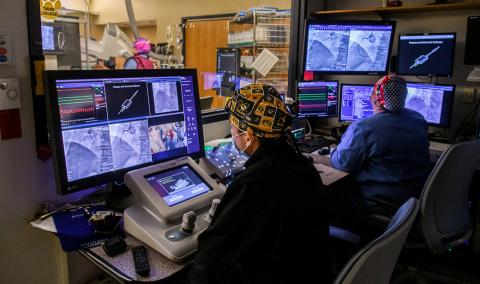
  • Robotic thoracic surgery: Surgeons use robot assistant technology to enhance precision during surgery and improve outcomes.
  • Surgical treatment for hyperhidrosis: Cuts or clamps the sympathetic nerves in the chest to stop excessive sweating in the hands, armpits or face.
  • Sympathectomy for severe hyperhidrosis: Severs and blocks sympathetic nerve signals in the chest to stop severe hand, underarm or facial sweating.
  • Thoracotomy: An incision is made in the chest wall to diagnose and treat the lungs, heart, esophagus and other thoracic structures.
  • Tracheal resection or stenting: For conditions where the airway is narrowed or has collapsed, a hollow tube is inserted into the trachea (windpipe) to keep it open.
  • Video-assisted thoracoscopic surgery (VATS): Small incisions, a camera and specialized tools are used to operate on lungs, esophagus and other chest structures.

Our Technology and Facilities

Most thoracic procedures take place at our main hospital in Columbia, where hybrid operating rooms support both open and minimally invasive surgery. These rooms feature real-time imaging, digital navigation and intraoperative monitoring.

Whenever possible, we use robotic or video-assisted techniques that require only small incisions. These options often mean less pain, a shorter hospital stay and quicker recovery.

For large tumors or complex conditions, we may recommend a traditional open thoracotomy. Whatever approach you need, you’ll have access to the latest surgical technology and expertise.

Coordinated Care and Follow-Up

We may schedule a follow-up visit a week after surgery at our thoracic clinic. This early visit allows us to check your healing, answer questions and adjust your care plan if needed.

We also stay in close contact with your referring provider, primary care doctor or oncologist to keep your care team aligned. If you need additional testing before or after surgery, we will coordinate with pulmonology or gastroenterology specialists.

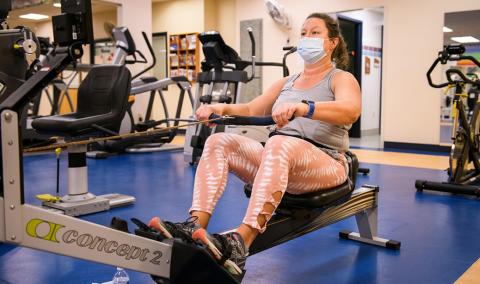
To support your recovery, we offer services like cardiac and pulmonary rehab, nutrition counseling and physical therapy. You'll also go home with instructions for incision care, breathing exercises and when to contact your care team.