Some babies are born with fused or “webbed” fingers or toes, a condition called syndactyly. At Children’s Hospital, our surgeons offer advanced separation procedures to support healthy hand and foot function as your child grows.
If you’re a parent of a baby with syndactyly, our team at Children’s Hospital is here to guide you through options and next steps.
Our Team for Syndactyly
Your care team includes specialists who can provide the treatments and support your family needs as your baby grows. This team includes:
- Pediatric hand surgeons (including pediatric orthopaedic surgeons and pediatric plastic surgeons): Can separate fingers and toes with surgery.
- Certified hand therapists: Provide therapies to improve your child’s hand function after surgery.
- Developmental pediatricians: Can help guide your baby’s treatment if they have other conditions that may affect their growth.
- Geneticists: Can test your baby for genetic disorders that can cause syndactyly.
- Occupational therapists: Help older kids with syndactyly improve daily functionality.
Signs and Causes of Syndactyly
Signs your baby has syndactyly include:
- Two or more fingers fused together on one or both hands
- Two or more toes fused together on one or both feet
- Having fused fingers and toes, which is rare but can affect babies with genetic disorders
During pregnancy, your baby’s hands or feet may not have developed fully separate digits because of a genetic mutation (change) or other issues or exposures during pregnancy.
Getting Care for Syndactyly
Without treatment, syndactyly can affect the development of your baby’s hands or feet and limit their movement. Our specialists are here to help you avoid these issues. Your OB/GYN, maternal fetal medicine specialist, neonatologist (newborn intensive care specialist) or pediatrician can refer you to our team. Or you can reach out to us directly.
Types of Syndactyly
There are several types of syndactyly:
- Complete syndactyly: The digits are fully joined the entire length of the finger or toe.
- Incomplete syndactyly: The digits are joined only part of the way.
- Simple syndactyly: The fingers or toes are joined by skin and soft tissue only.
- Complex syndactyly: The bones of the fingers or toes are fused together.
- Complicated syndactyly: The fused fingers or toes have extra bones or other tissue.
- Acrosyndactyly: A form of syndactyly that is often associated with certain craniosynostosis syndromes where the tips of the fingers are fused together, with a small hole connecting the front to the back of the hand at the base of the fingers.
Our experienced team is skilled in diagnosing and treating all forms of syndactyly in kids.
Syndactyly Diagnosis at MU Health Care
Your baby may have been diagnosed with fused fingers or toes during the prenatal ultrasound. Or your OB/GYN may refer you to one of our hand surgeons after your baby is born.
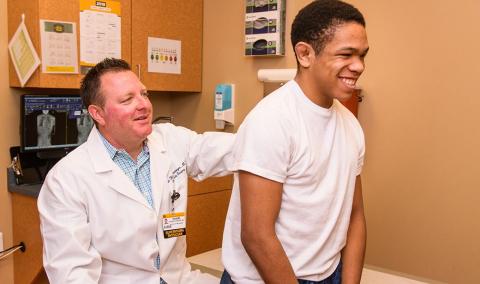
During your first visit with a surgeon, we’ll examine your baby and take X-rays of their hand or foot. If your baby has other signs of a genetic disorder like Apert syndrome, we may recommend genetic testing.
Once we have a diagnosis, we’ll work with you to determine the best care plan that meets your baby’s needs.